A Boy Stood Up at the Hero Firefighter’s Medal Ceremony and Screamed, ‘That’s the Man Who Poured Gas on Our Porch!’
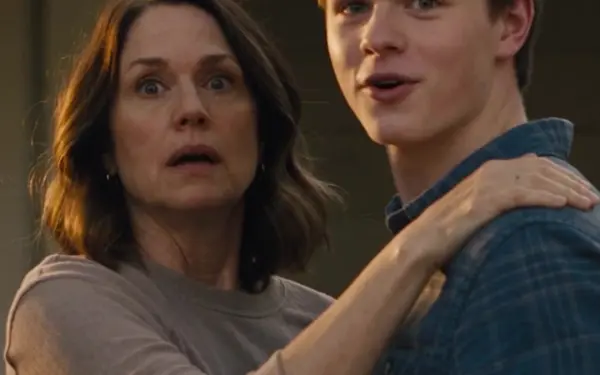
At a Missouri town hall ceremony, a firefighter was about to receive a bravery medal for saving a family from a house fire. Then the family's little boy stood up and screamed that he had seen him start it.
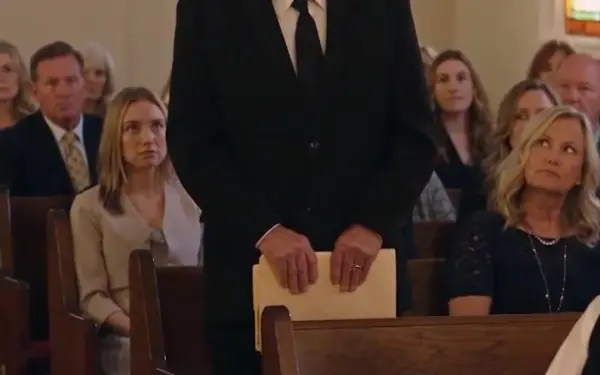
Every eye in the Harlan Springs town hall was fixed on a pair of black work boots with bright red laces. Nine-year-old Caleb Delaney had just told the whole town that he saw the man wearing those boots pour gasoline on his family’s porch the night their house burned. The man was Travis Boone, the volunteer firefighter about to receive a Medal of Valor for saving them. Fire Chief Walt Hensley had just named three other fires Travis “discovered” first that year. And Travis was stepping backward toward the side door of the stage.
The Side Door
He didn’t make it. Deputy Ray Cutler of the county sheriff’s office had come to the ceremony to watch his niece hand out programs. He was standing by the side door. He didn’t arrest anyone. He just stood in front of it and said, “Let’s everybody stay put a minute, Travis.”
Travis tried to laugh it off. He said the kid was traumatized. He said half the men in the county had red laces. He said the chief had always been jealous of him. The mayor quietly closed the velvet box and set the medal on the podium.
Chief Hensley asked Travis, in front of everyone, one question: “Then you won’t mind if the state fire marshal takes a look at your truck.”
Travis didn’t answer. He sat down on the edge of the stage and put his face in his hands.
The Chief’s List
It turned out Walt Hensley had been suspicious for almost a year.
In thirty-eight years, he had learned that some fires don’t behave the way they should. The Miller barn fire started at a back wall with no wiring. The empty house on Route 9 had two separate points of origin. The hay shed on Cooper Road burned on a rainy night. And every time, the first person on scene, the one who called it in, the one in the newspaper photo, was Travis Boone.
Hensley had quietly reported his concerns to the Missouri Division of Fire Safety in August. An investigator had already started looking. But there was no proof, and nobody in town wanted to believe it. When the Delaney house burned and Travis became a hero, the chief said, “I felt sick to my stomach. And I couldn’t say a word.”
He had come to the ceremony in uniform because it was his duty. He had his notes on his phone because he had a feeling.
What They Found
The state fire marshal’s investigators searched Travis Boone’s pickup truck that evening with his consent, which his lawyer later regretted. Behind the seat they found a red plastic gas can with almost nothing left in it, a box of long fireplace matches, and a notebook.
The notebook listed addresses. Some of them had already burned. Some of them had not. Next to each address was a time, a note about when the occupants usually slept, and in some cases, the words “kids — good photo.”
Lab tests later found gasoline residue on the red laces of his boots that matched the accelerant on the Delaney porch.
Investigators said Travis had been passed over twice for a paid position with a larger department in Springfield. He had started setting fires, they believed, to be the hero. Each fire got bigger. Each rescue got more attention. The Delaney fire, with a mother and two small children inside, was the one that finally made him famous.
“He wasn’t trying to kill anybody,” one investigator said. “He was trying to be seen. But a house fire at four in the morning doesn’t care what you’re trying to do. That family was minutes away from dying.”
The Boy Who Was Right
Travis Boone was charged with first-degree arson on four counts and three counts of first-degree endangering the welfare of a child. He later pleaded guilty. He was sentenced to eighteen years in state prison. The fundraiser in his name was shut down and the money was given to the Delaney family.
Rachel Delaney cried for an hour after the ceremony, holding her son. “He tried to tell me,” she said. “He tried to tell me for three weeks. Every nightmare. Every time he wouldn’t look at the newspaper. And I kept telling him it was a dream.”
Caleb’s nightmares stopped about a month later.
In November, the Harlan Springs town hall filled up again. Same folding chairs, same flags, same cookies from the Ladies’ Auxiliary. This time the mayor opened the blue velvet box and put the bronze medal around the neck of a nine-year-old boy, who had to stand on a chair to reach the microphone.
He said only one thing: “Thank you for believing me, Chief.”
Walt Hensley retired that winter. On his last day, he gave Caleb his old fire helmet. Caleb wears it to bed.
More Stories Like This
If this story gave you chills, explore more true-to-life stories on US Drama Hub: secrets exposed, liars caught in public, and quiet heroes who refuse to look away. Share it with someone who always believes the kids.