He Mocked the Deaf Barista’s Sign Language in a Packed Coffee Shop. Then a Quiet Man in the Back Stepped Forward
A customer mocked a deaf barista's sign language in a packed Denver coffee shop. Then a quiet man in a gray coat signed to her and told him one thing.
On this page
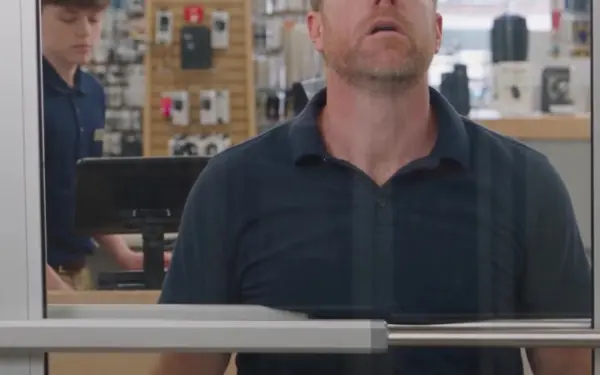
It was 8:15 on a Tuesday morning at a busy coffee shop in Denver’s LoDo neighborhood, the kind of place with tall windows, exposed brick and a line that stretches to the door before work. Behind the counter, Emily Sandoval, 23, was taking orders in her green apron. Emily is deaf. She reads lips well, keeps a notepad by the register for anyone who prefers to write, and most regulars have learned to point at the menu or sign “thank you.” Nobody had ever made it a problem.
Then a man in a dark suit with white AirPods in his ears reached the front of the line.
“Can You Even Understand Me, Sweetheart?”
A customer a few spots back started filming because, as she put it later, “you could just feel he was going to be that guy.” She was right.
The man, whom the internet would soon know only as Chad, rattled off a complicated order without looking up from his phone. Emily tapped her ear, smiled, and slid the notepad toward him. Chad slapped the counter. Then he started laughing and flapping his hands in the air in front of her face, a sloppy, exaggerated imitation of sign language, while the whole line watched.
“Can you even understand me, sweetheart?” he said, loud enough for the back of the room to hear.
The video shows Emily’s face fall. She glanced at the notepad again and pointed at it, patiently. Chad brushed it off the counter with the back of his hand. “I don’t have time for this,” he said. “Get me someone normal.”
The Quiet Man in the Gray Coat
The coffee shop went silent. The espresso machine was still hissing, but nobody was talking. A few people looked at the floor. One woman shook her head. Nobody said a word.
Then an older man near the back of the line, in his sixties, wearing a long gray wool coat, stepped forward. He walked past Chad without even looking at him, stopped in front of the counter and began signing to Emily. Not a few words. Full, fluent American Sign Language, fast and warm and natural.
Emily’s eyes filled with tears. She signed back. The man nodded and touched his heart.
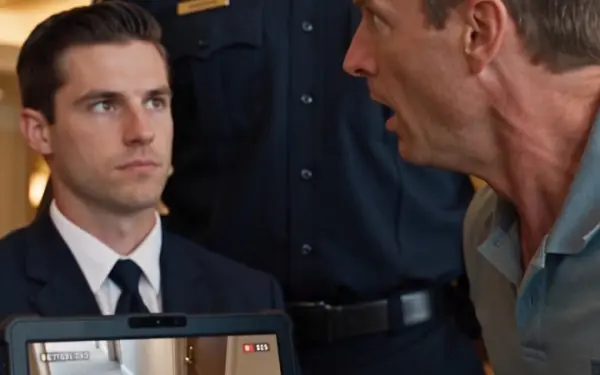
Then he turned to Chad, completely calm, and said: “Sit down, son. You just insulted the one person who can save your job today.”
The clip ends with Chad’s face going white.
Who Was She Really?
The video exploded across Denver within hours, and the question in every comment section was the same. What did he mean, the one person who could save his job?
The answer turned out to be almost too perfect.
Chad was a regional sales director for a software company that builds patient check-in apps for hospitals. His company had spent eight months trying to win a contract with a large Colorado health network. It was the biggest deal of his career, and everyone knew his position depended on it. The final presentation was scheduled for 10 a.m. that same morning, two blocks from the coffee shop.
The older man in the gray coat was Thomas Sandoval, the health network’s chief operating officer. He was one of the three people who would vote on the contract that morning.
And Emily was his daughter.
Emily had been born profoundly deaf. Thomas and his wife learned ASL when she was a baby and never stopped using it. Emily works at the coffee shop three mornings a week, but her real job is something else entirely. She had just finished a master’s degree in accessibility design and had been hired by her father’s health network, through a separate consulting firm, as a paid accessibility tester. Her job was to use apps like Chad’s the way thousands of deaf and hard-of-hearing patients would, and write an evaluation. Her report on Chad’s product was due on the desks of the decision panel that same afternoon.
The Meeting
Chad showed up for the 10 a.m. presentation. People who were in the room said he was visibly shaking. Thomas Sandoval sat at the end of the conference table and didn’t mention the coffee shop at all. He let Chad give the whole pitch.
When it was over, Thomas asked just one question: “How would a deaf patient check in for an emergency appointment using your app if the video help line is the only support option?”
Chad didn’t have an answer. The app didn’t have text-based support. It didn’t have captioning on its tutorial videos. Emily’s report, submitted that afternoon, was eleven pages long, fair and professional. It recommended the network not move forward until those problems were fixed. She never mentioned Chad’s behavior in it at all.
The Extra Twist
The network signed the contract with a competitor two weeks later. But that’s not what cost Chad his job.
The viral video did. Chad’s own CEO saw it on a Friday night, after his teenage daughter showed it to him and asked, “Isn’t that the guy from your company?” She knew because Chad had been to their house for a holiday party. Chad was let go the following Monday. The company issued a public apology and announced it would rebuild its app with full accessibility features, and it hired an outside consultant to help.
The consultant they hired was Emily.
She took the contract through her firm, gave them the same honest, detailed feedback she gave everyone, and the new version of the app launched six months later with text chat, captions and a sign language video option. Thousands of patients use it now.
The Resolution
About a year after that morning, Emily was working the register when a man in jeans and a hoodie stepped up to the counter. It took her a second to recognize Chad. He didn’t say anything out loud. He signed, slowly and carefully, the way someone signs after a few months of classes: “I’m sorry. I was cruel. I’m learning.”
Emily said she stood there for a long moment. Then she signed back, “Keep learning,” and made his coffee.
Her father still comes in every Tuesday. He always stands at the back of the line.
More Stories Like This
If this story made your day, read our stories about the waitress who was mocked for her accent and turned out to own the restaurant, the janitor a CEO ignored for years who quietly saved the company, and the teenager who stood up for a stranger on a city bus. Karma doesn’t always show up loud. Sometimes it’s standing quietly at the back of the line.